Location
Jersey, Channel Islands
Completion date
Planning stage
Construction Time
TBC
Stages
From technical design to completion
The Rural House
A phased programme of works to restore, refurbish and sensitively update a Grade 3 listed early 19th-century rural house in Trinity, Jersey. The first phase, currently at planning stage, addresses the replacement of the original timber sash windows, selective external door replacements, and the creation of an open-plan kitchen and dining area, bringing the house to contemporary standards of comfort while preserving its architectural character and listed status.
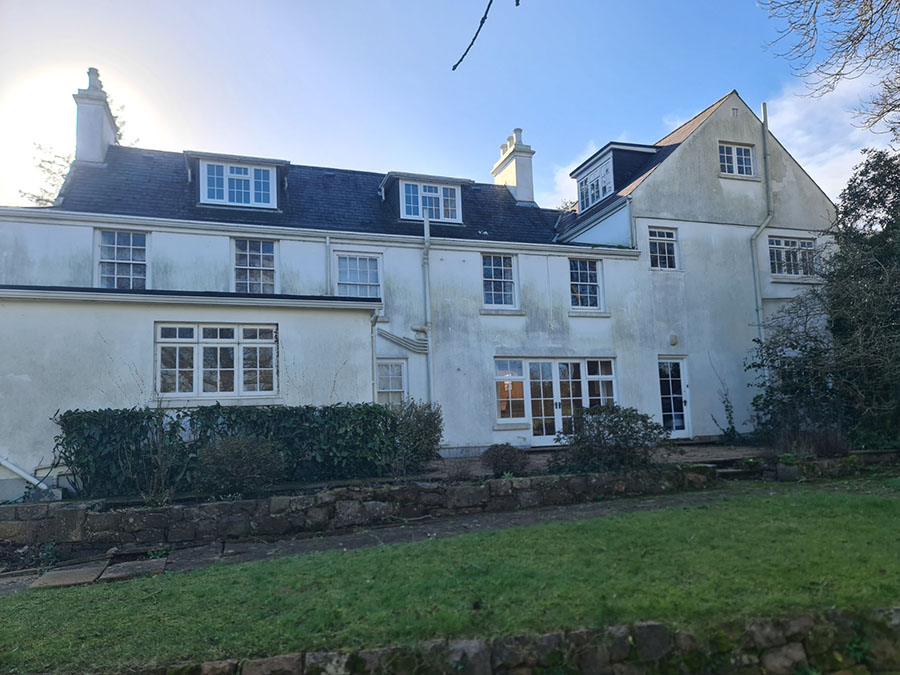
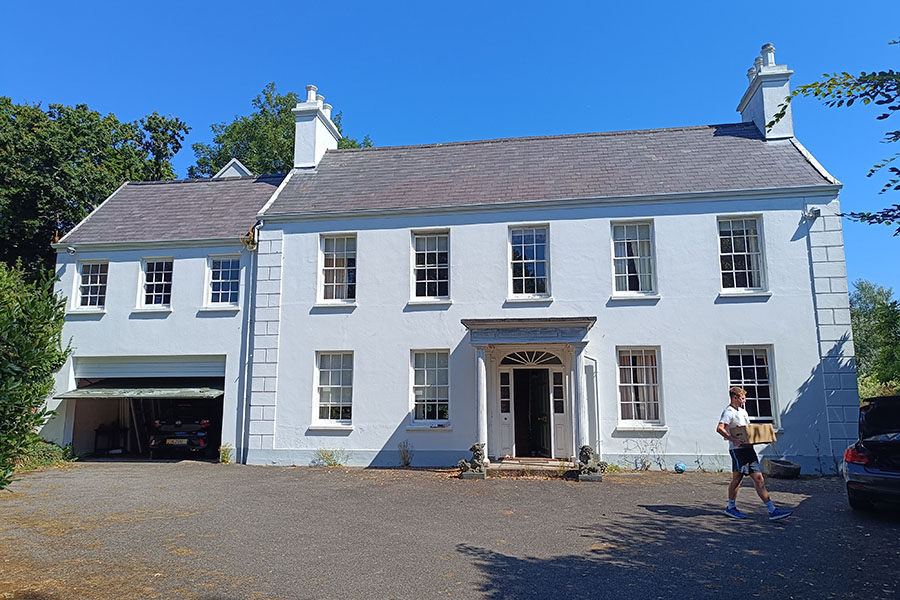
This building is an early 19th-century rural house in Trinity, listed at Grade 3 for its architectural and historic significance. The symmetrical south elevation, original timber vertical sliding sash windows, classical detailing, and intact internal plan form are all features that define the building’s character and inform the approach to every element of the proposed works.
The project is conceived as a phased programme. The first phase, for which Listed Building Consent is being sought, focuses on two areas: the replacement of the existing single-glazed windows and selected external doors, and internal alterations to create an open-plan kitchen and dining area. Subsequent phases will address a full refurbishment of the house, insulation upgrades throughout, and the broader modernisation of the building to bring it to contemporary standards of living.
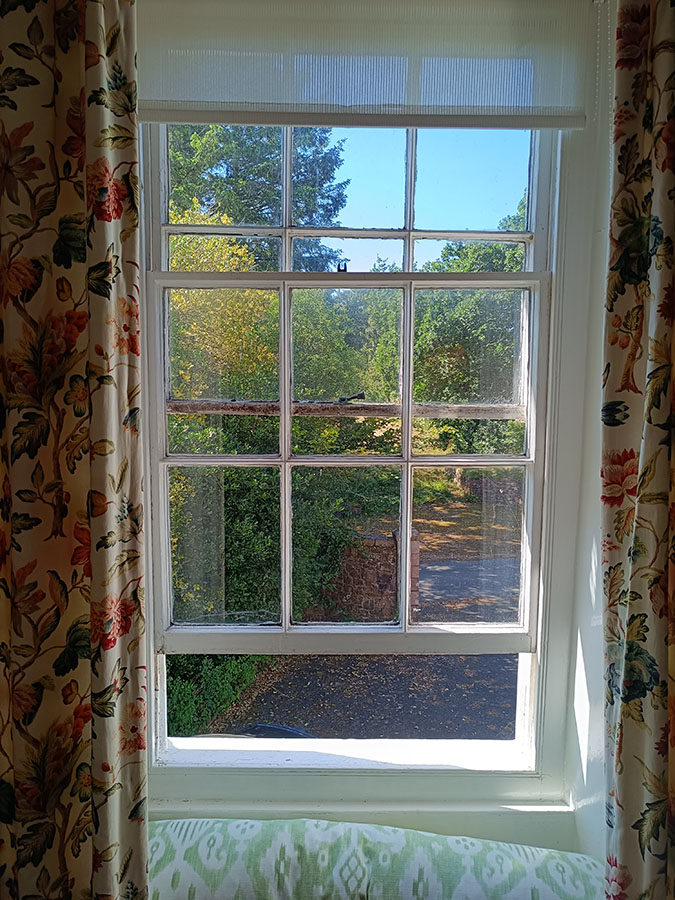
The existing windows, though original, are in poor thermal condition. Draughts and heat loss make the house uncomfortable to occupy, and refurbishment of the existing frames to achieve meaningful thermal improvement is not considered technically viable. The proposed replacement windows are like-for-like in every visible respect, but with a slim-profile double-glazed unit of approximately 16mm ( TBC further planning). The original external timber shutters are to be refurbished and reinstalled. The result is a window that looks entirely at home on a listed Jersey rural house while delivering a marked improvement in thermal performance.
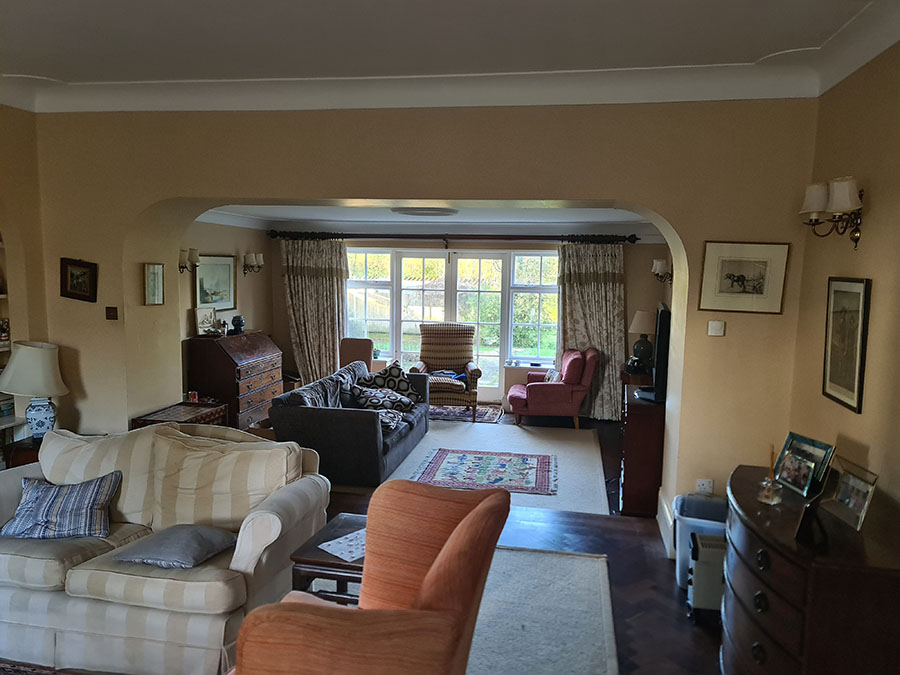
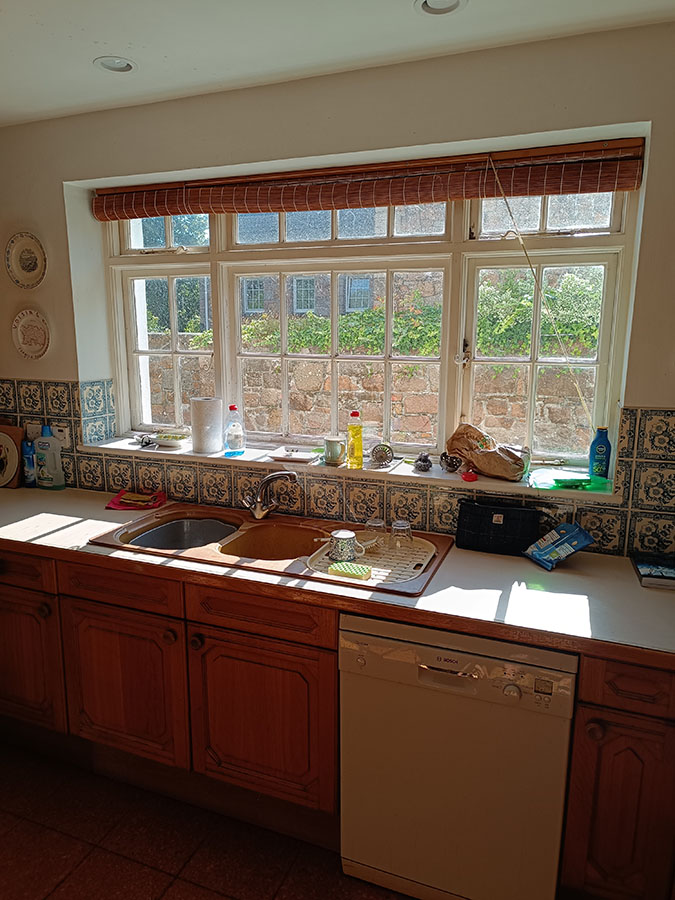
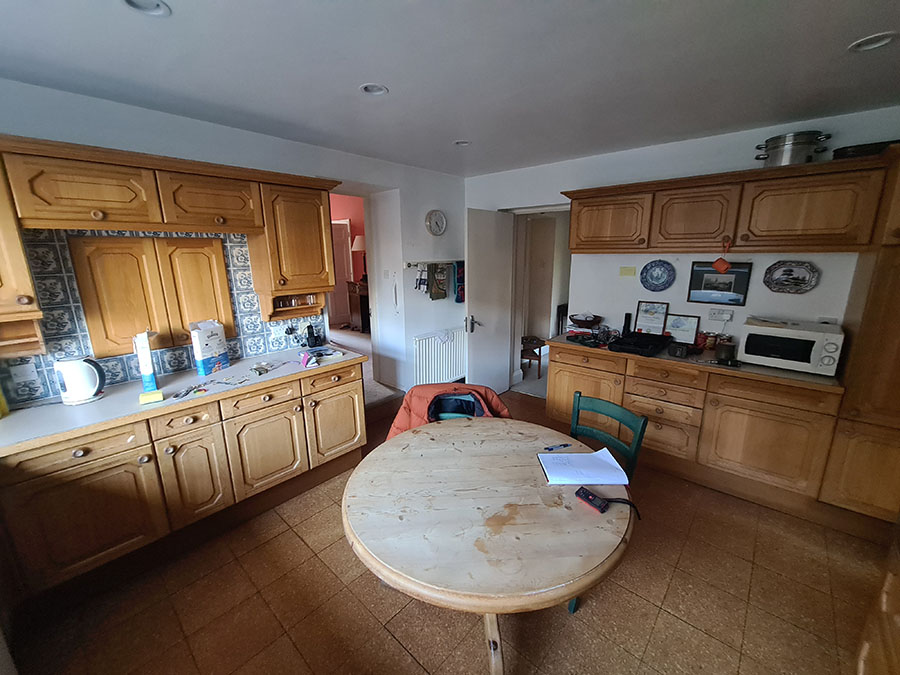
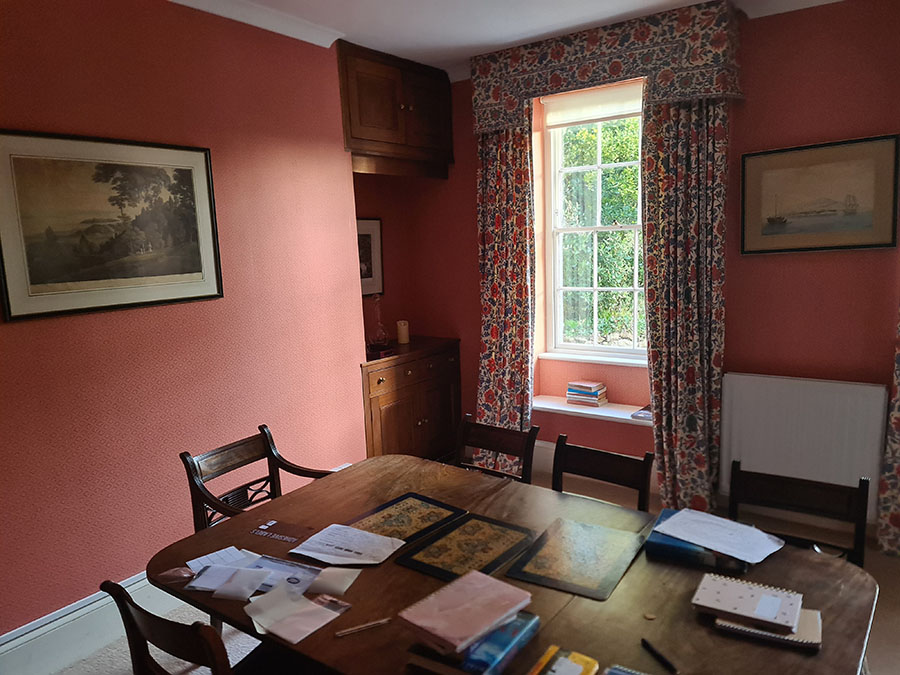
Internally, a partial wall removal opens the kitchen and dining area into a single connected space. The alteration is located away from the principal elevations and does not affect the building’s historic plan form where it is externally legible. The kitchen floor level is raised to match the adjacent living room, and a redundant door between the cloakroom and kitchen is blocked. These are modest interventions, carefully controlled to sit within the spirit of the heritage consent.
The works represent the first step in a longer journey for Brookhall, one that is guided throughout by respect for the building’s significance and a commitment to its long-term comfort, viability, and care.