
5 key steps to your dream loft conversion
Architectural Technologist
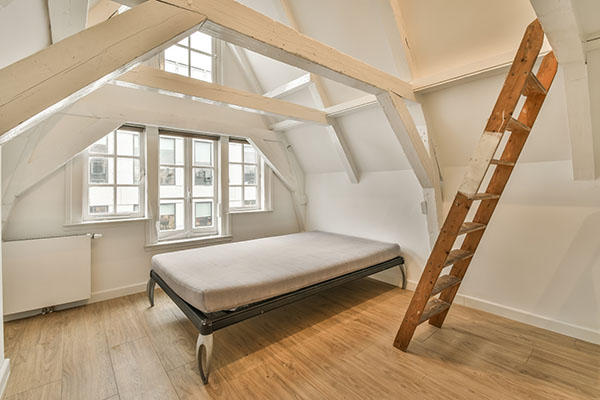
Loft conversions can be a great way to add space and value to a property. They have the power to change an unused space for a cosy bedroom with an en suite, or perhaps an office space to work from home!
If you have identified the need for a bigger property, there are limited options. You could build an extension or annexe, convert the loft space or move to a bigger property. Loft conversions can be a more cost-effective way to add living space than an extension because it involves altering a space that has already been built. They are particularly useful in built up areas such as London or Brighton where available space is very limited, you could expect a bigger return on investment when it comes to the new valuation of the property.
1 Is a loft conversion feasible?
The first thing to find out is whether or not this is a viable option for your property. There are many factors that need considering before deciding to convert a loft. These include ceiling heights, location of new staircase, services or drainage plans, any restrictions or covenants in the house deeds. To comply with Building Regulations, you will need to have at least 2m head height above your new stairs ( 1.9 metres in the middle of the stairs is the ceiling is vaulted). Loft conversions can be done under permitted development depending on its size, and local rules.
It is a good idea to check the neighbouring properties to see if any have loft conversion this can be an indication of whether it is feasible especially if the properties are of the same design or heights. Look out for dormers or rooflights in particular.
It is always worth appointing an architect or qualified individual to advise on planning concerns, budget costs and other areas such as serving party wall notices. At Grumitt Wade Mason, we combine architectural and surveying expertise under one roof, allowing us to manage both your planning applications and party wall matters seamlessly.
2 Obtaining plans and planning consent
Once you have decided that a loft conversion is the right project for you, it is time to get plans drawn up. These plans can also be done as part of the feasibility stage as they help show how much floor area is possible to gain and the new layouts. Elevations and section drawings also help illustrate what the new loft would look like. Plans are necessary to submit as part of the planning/lawful development certificate application. If your loft conversion qualifies as permitted development, planning permission is not legally required. However, obtaining a Lawful Development Certificate is highly recommended as it provides official confirmation of compliance and proves invaluable when selling your property.
It is important to employ a qualified person to draw the plans to ensure that a planning application has the best chance of gaining approval. For example, under permitted development rights a new loft conversion cannot exceed the height of the existing ridge and must not exceed 40 cubic metres for semi-detached or detached houses (50 for terraced). Any proposal that seeks to raise the overall height of the structure or this to add more than this figure would need a householder or full planning application.
3 Structural engineer’s design and building control approval
The structure is one of the main aspects of a loft conversion project. A structural engineer needs to be appointed to determine suitable new joist/rafter sizes, calculate loadings and specify new beams or lintels as necessary to comply with Part B of the building regulations. In some cases, it might be determined that the existing foundations are not suitable for the proposed new loadings and need to be underpinned although this is not common, it could be an issue for a property that has signs of subsidence.
Note: New dormers are usually constructed of timber frame and for good reason! This keeps the new structure lightweight and allows for thinner wall profiles as you can insulate between and behind rafters or joists. This means you can get more floor space as a result.
Once you have a structural engineer’s design, you can then apply for and gain approval from building control. They check all plans to ensure the project complies with all regulations and can highlight any areas of concern.
4 Project can go out to tender
The next step is to find reputable companies to tender for the works. This is important to find suitable companies to price the job. We use a selection of trusted construction firms along the south coast. Should you opt to do this yourself it is vital that you research into each company thoroughly checking their insurance details and reviews. Always obtain at least three quotations before accepting an offer for the works. We offer specification writing as well as contracts administration, this means that we write specifications of works, acquire and analyse itemised tenders that include any provisional works that might doing. This protects you as the client from any extortionate extra costs that might occur if the builder has not allowed for it in their prices. As soon as you have instructed the contractor you are in a contract with them and both parties should abide by this.
5 Construction phase
This can be the stressful part, especially if you opt to live there whilst works are ongoing! However, it tends to be less disruptive than a large extension because the vast majority of work is done from outside on scaffolding. As the contract administrators we tend to visit site weekly or bi-weekly to see the build progress, inspect the quality of work being carried out, ensuring the project is on schedule and that all parties are abiding by the contract.
Once the works are completed and signed off by building control as well as the principal designer, final accounts can be processed. This is known as practical completion. Then, you are free to enjoy the benefits of your new storey!
Summary
Converting a loft into habitable rooms is an efficient and cost-effective solution to needing more space. It is not always the right answer for everyone however, if done correctly it can add so much value to your everyday living requirements. It could well end up being the least stressful option when comparing with an extension or buying and selling your home!
At Grumitt Wade Mason, we provide comprehensive loft conversion services: feasibility assessment, planning and construction drawings, contractor recommendations, building control approval, and construction oversight under a JCT contract. Our surveying team also handles party wall notices when required, typically when your dormer spans the full width of your loft and structural work is needed within the party wall.
Whether you need a feasibility study, plans produced or perhaps know what you want but are just not sure what to do, get in touch with us today and we can help.
Recent Journals
How to Design a Hydrotherapy Pool at Home — Everything You Need to Know
Director of Grumitt Wade MasonIn recent years, we have been asked on a regular basis to consider whether a property could accommodate a hydrotherapy pool to meet the client’s needs. We ask a range of questions with the family and therapist to determine what is...
What to Consider When Buying a Home if You Have a Disability
Director of Grumitt Wade MasonFinding the right home when you have a disability, mobility challenge, or sensory need goes beyond location and budget, it is about a property that works for you now and in the future. As architects specialising in accessible and...
Office Culture in Design Firms: What Makes an Architectural Office Unique?
Administrative and secretarial supportWhen you think of an architectural office, you might imagine long hours spent hunched over plans, creative debates about design, or quiet moments of inspiration as an architect sketches out a new project. But the culture within...

Dormans Youth Arts Centre – Preparing for Planning
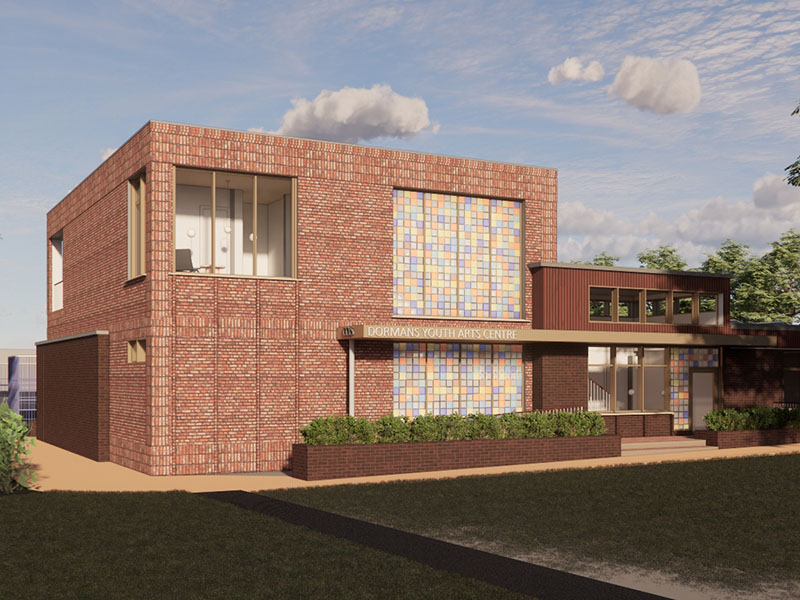
We are preparing a planning application for the redevelopment of Dormans Youth Arts Centre in Gossops Green, Crawley. Originally built in 1965, the centre has long been a cornerstone for local young people, offering creative, social, and recreational programmes.The...
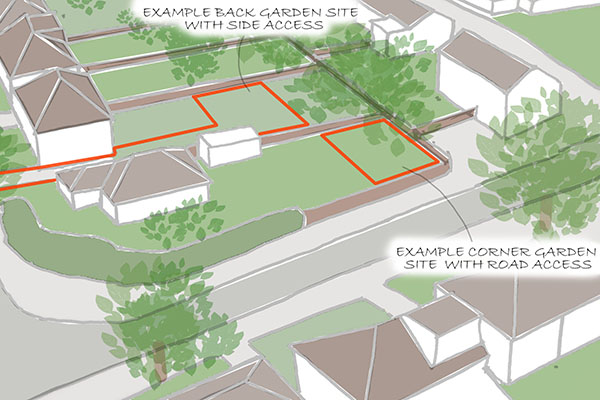
Can I Build a House in My Garden? 8 Key Things You Need to Consider
Chartered architectThe Government Wants More Homes—Could Your Garden Be Part of the Solution? The Labour government has pledged to build 1.5 million new homes during this parliament—a bold ambition aimed at addressing the UK’s ongoing housing shortage. To help...
Empowering through design, case study 1
Chartered architectThis case study highlights a transformative project we completed for a family in an Art Deco house, where we adapted the space to meet the specific needs of their teenage child with a disability. The home, originally divided in a traditional...

Why every architect should design to brick dimensions
Chartered architectural technogolistAs architects/designers, we take on a wide range of roles—the creative thinker, problem solver, technical expert, and more. One of the most basic, surprisingly important skills we need is a solid understanding of standard...